Canadian drink makers shift can orders to China after U.S. tariffs raise costs
North American can prices have climbed about 50%, making some Chinese containers up to 8 cents cheaper.
Monday, September 21, 2026
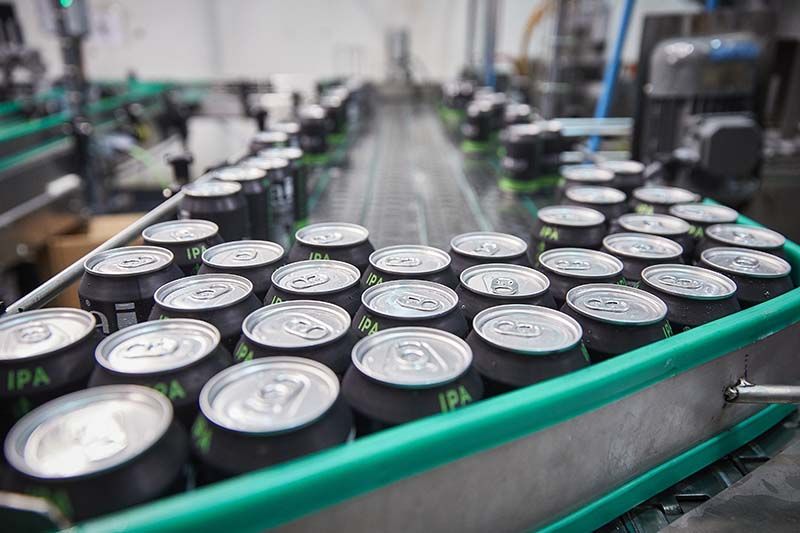
Canadian brewers and other canned drink makers are shifting part of their aluminum sourcing to China after U.S. tariffs drove up can costs across North America, changing a long-standing supply pattern in a business where packaging can make or break margins.
The change is being felt in Canada’s beer industry and in the fast-growing market for canned spirits cocktails. Companies that for years relied on U.S. suppliers now say Chinese cans can be materially cheaper, even after shipping, because tariffs have pushed up regional aluminum prices and raised the cost of North American-made containers.
The Canadian Vanguard reported that can prices in North America have climbed about 50% since early last year after U.S. tariffs sharply increased aluminum costs on both sides of the border. The pressure matters well beyond metal producers. For beverage companies, the can is often one of the biggest single costs in each unit sold, which means higher packaging costs can quickly squeeze profits, force price increases and reshape purchasing contracts across the beer, spirits and broader drinks business.
In Burnaby, British Columbia, Vadim Bajgoric, whose company Canvas Craft digitally prints cans for breweries, said Chinese supply has become much more common in his warehouse. He told the publication that two years ago all of the cans moving through his printing line were made in North America. Now, he said, about half of the cans on his warehouse floor had come from China, with U.S.-made cans and Chinese-made cans arriving on different pallet types.
Bajgoric said factories outside Shanghai are selling cans at about a one-third discount to comparable U.S. products. “China has a tremendous edge,” he said.
The shift reflects the structure of the North American aluminum trade. Canada is a major producer of aluminum, but the United States is the main maker of aluminum coil used to manufacture cans. Contracts for cans on both sides of the border are commonly tied to U.S. Midwest aluminum pricing, an industry benchmark that has been pushed higher by tariffs. The United States has imposed 50% tariffs on Canadian aluminum, while Canada has responded with similar measures but carved out exemptions for goods used in food and beverage packaging.
That pricing system has helped Chinese suppliers compete more aggressively in Canada. Shane Vear, owner of Southern Ontario-based Caravan Bev Co., which imports and distributes Chinese cans, said his business has risen 30% since last year as drink companies look for lower-cost options. For some can sizes, he said, Chinese pricing is now close to what U.S.-made cans cost before President Donald Trump’s second inauguration and the new wave of tariffs that followed.
According to the report, the gap can reach 8 cents per can. In an industry that fills billions of units a year, that difference is significant. Canada’s brewers collectively fill about 3.7 billion cans annually. A few cents on each can can have an immediate effect on margins and may influence wholesale pricing, retail prices and future supply contracts.
Yuri Akeroyd, president of The Strait & Narrow on Vancouver Island, said his company has shifted most of its can purchases to China over the past eight months. The company sells canned gin and vodka cocktails, and Akeroyd said the decision was about survival. “Five cents a can is the difference between being profitable or not in our business,” he said.
Akeroyd said cost was not the only factor. After nearly two years of policy swings from Washington, he said buying from overseas now feels less volatile than relying on a U.S. market subject to sudden tariff changes. He told the publication he would likely keep buying Chinese cans even if they were not cheaper, because of the uncertainty around future U.S. trade policy.
Not every producer can move quickly. Larger beverage companies are often locked into multiyear supply agreements, which has slowed the overall change in import patterns. Canadian trade data show that the value of Chinese aluminum can imports rose 14% in 2025. Spending on U.S. can imports also increased, up 11%, and American suppliers still dominate the Canadian market. Those figures do not show how buying patterns may have changed in 2026, and they do not separate the effect of higher prices caused by tariffs from changes in the number of cans purchased.
Crown Holdings, one of the major U.S.-based can manufacturers serving Canada, said in its annual report that its 2025 net sales increased mostly because of the pass-through of higher aluminum costs. The company operates can plants in Calgary and Toronto as well as multiple U.S. facilities. It did not respond to a request for comment cited in the report.
Some Canadian brewers are trying to stay with local or North American supply despite the higher cost. In Calgary, Big Rock Brewery buys 355-milliliter cans from Crown’s nearby plant. David Kinder, Big Rock’s president, said local sourcing fits the company’s priorities, but the rising cost has become difficult to absorb. He said aluminum tariffs alone have cost Big Rock more than $1 million so far this year. Six weeks ago, the brewery cut 10% of its workforce.
Big Rock remains bound by a multiyear agreement to buy North American cans, but Kinder said the company has started to look at alternatives. “It’s not really about what I’d like to do,” he said. “It will get to the point it’s about what I need to do have a viable business.”
Others question whether Chinese cans will remain the cheaper option once freight risk is fully counted. Ocean shipping costs have risen sharply after the war in Iran, adding another layer of uncertainty for importers moving containers across the Pacific. Jim Lister, president of Phillips Brewing and Malting Co. in Victoria, said his company has sourced from Asia before and found it difficult. “You trade the volatility of the commodity market for the unpredictability and volatility of the shipping world,” he said.
Phillips Brewing has contracts for North American cans until early next year, but Lister said he is reviewing alternatives. He said a Canada-U.S. trade deal or a shift in U.S. policy after the November midterm elections could still change the picture. If not, he said, brewers may have little choice but to pass more of the higher packaging cost on to consumers. “You can’t keep eating cost increases without changing the price of your products at some point,” he said.