Burgundy exports reached 100.2 million bottles, but revenue fell 2.4%.
Weaker red wine demand, led by a 21.2% drop in U.S. sales, shifted the region toward lower-value shipments.
Thursday, October 8, 2026
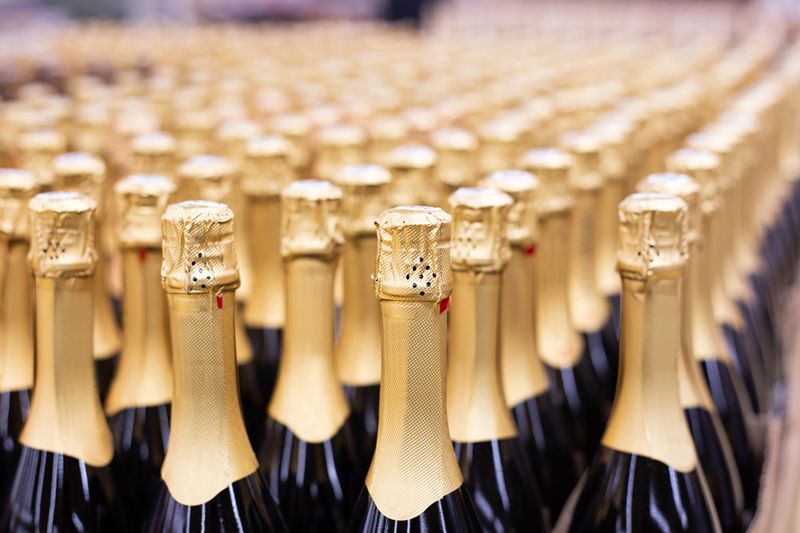
Burgundy wine exports increased in volume but lost value in the 12 months ended in July 2026, as weaker red wine demand and a stronger shift toward Crémant changed the region’s sales mix.
Figures based on data from the Comité des Vins de Bourgogne show that exports from Burgundy passed 100.2 million 750-ml bottles over the period, up 2.3% from a year earlier. Export value, however, fell 2.4% to €1.63 billion. That means the implied average value per bottle declined by about 4.6%, although that calculation should be treated with caution because the accessible source is secondary and does not publish a direct average price. The change can reflect several factors at once, including pricing, destination markets, vintages, and the mix of appellations sold.
The divergence between higher export volumes and lower export value came as Burgundy’s overall market also showed a clear internal shift. Sales of still wine fell 1.3% to 166 million bottles, a drop of about 2.2 million bottles. When Crémant de Bourgogne is included, total market sales were almost unchanged, rising just 0.05% to nearly 200 million bottles. The near stability at the headline level masked a more significant change underneath, with sparkling wine taking a larger role as red wine weakened.
Red wine was the clearest area of decline. Burgundy’s red sales fell 4.9% over the period. Within that category, red Grand Cru from the Côte-d’Or dropped 12%, showing pressure at the top end of the range as well as in the broader red segment. White wine moved in the opposite direction, though only slightly. White sales rose 0.4% to 116 million bottles.
Crémant posted the strongest growth. Sales of Burgundy’s sparkling wine rose 6.5%, and its share of the market climbed to 17%, up from 12% in 2021. That five-point increase in market share over five years shows how much of the region’s recent stability has come from sparkling wine rather than from its traditional red wines.
The data suggests that Burgundy is facing the same structural issue seen across other wine regions: softer demand for red wine and more resilient demand for other styles. In Burgundy’s case, the increase in Crémant has partly offset the fall in still red wine, helping total sales stay near flat. But the export numbers show that more bottles shipped abroad did not translate into higher revenue.
The United States, long a critical market for Burgundy, was a major reason for the weaker export value. Sales to the U.S. fell 21.2% in value to €292.4 million in the 12 months ended in July. That drop was large enough to weigh heavily on the region’s overall export performance even as shipments increased elsewhere. The U.S. remained one of Burgundy’s largest foreign markets, but its pullback stood out sharply against the results in other countries.
The United Kingdom moved in the other direction, though at a slower pace. Export value to the British market rose 3% to €243.37 million. Italy showed even faster growth, with export value up 21.1% and export volume up 15.4%. Those gains helped soften the impact of the U.S. decline, but they did not fully offset it at the global level.
The contrast between the U.S. and Europe points to a changing export map for Burgundy. A steep fall in one large, higher-value market can reduce total export revenue even if shipments rise overall and other countries buy more wine. That helps explain why Burgundy could export more than 100 million bottles and still end the period with lower total value.
Inventory data also shows the pressure is not uniform across categories. Total stocks were down 2.3% over the period. White wine inventories amounted to a little more than one year of sales, while red wine inventories were close to two years of sales. That gap is another sign of slower red wine rotation and relatively firmer white wine demand.
Lower inventories overall might normally support prices, but Burgundy’s figures suggest the product mix matters more than the stock trend alone. If reds, especially higher-end reds, are moving more slowly while Crémant and whites are holding up better, the value of total exports can still fall even with tighter stocks and more bottles leaving the region.
The data covers Burgundy’s sales, exports, and inventories during the 12 months ended in July 2026. The region’s performance during that period was shaped by three movements happening at the same time: a decline in red wine, continued growth in sparkling wine, and a negative split between export volume and export value. For producers and merchants, that mix matters because it affects revenue, stock management, and market strategy in different ways across appellations and styles.
The decline in red Grand Cru from the Côte-d’Or is especially notable because those wines sit at the top of Burgundy’s reputation and pricing ladder. A 12% drop there does not by itself explain the full export value decline, but it adds to the broader picture of softer demand in red categories that have traditionally been strong value drivers for the region.
By contrast, Crémant’s rise continues to change Burgundy’s profile. Its share of the market has grown steadily since 2021, reaching 17% in the latest period. That does not mean Crémant replaces the role of top still wines in terms of prestige or bottle value, but it has become a more important source of volume and stability.
Because the accessible source does not provide a direct bottle price, the estimated 4.6% fall in implied export value per bottle should not be read as a simple price cut across the board. A change in destination markets can affect the average if sales shift away from countries that buy more expensive wines. The same is true if the product mix tilts toward Crémant or toward lower-priced appellations, or if vintage timing affects what is available to sell. Even so, the direction of travel is clear: Burgundy shipped more bottles abroad, but earned less from them.