French winegrowers are retooling vineyards after Bordeaux logged 32 days above 35C
To preserve acidity, producers are leaving more leaf cover, picking in multiple passes and lowering fermentation temperatures
Monday, October 19, 2026
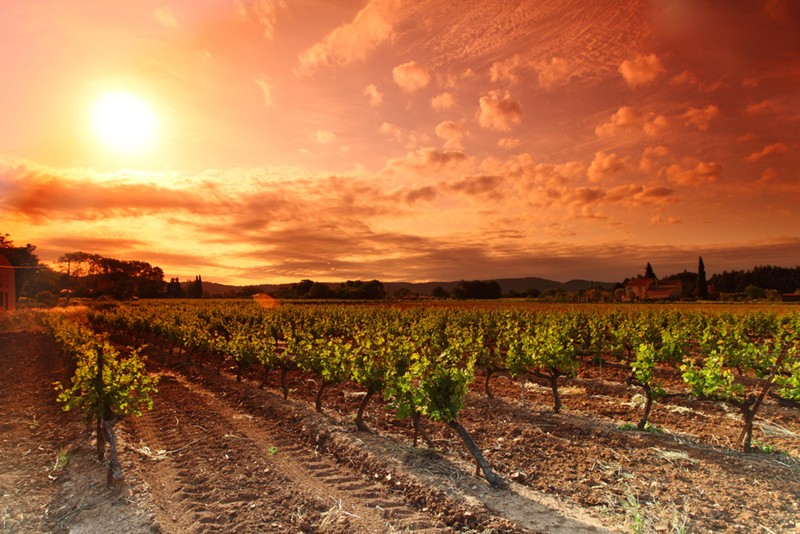
French winegrowers in Bordeaux and Burgundy are changing how they manage vineyards and ferment grapes after another very hot season made it harder to preserve acidity, a key factor in how fresh a wine tastes and how well it ages.
Producers and consultants told Terre de Vins that repeated heat waves are disrupting the normal pace of ripening. Sugars can rise quickly while aromatic and phenolic maturity, which shapes flavor, tannins and texture, does not always keep up. That leaves growers with a narrow and difficult choice at harvest: pick early and keep more acidity, or wait longer for fuller ripeness and risk higher alcohol, cooked fruit flavors and flatter wines.
The problem was already visible in 2022, a hot and dry vintage that produced grapes high in sugar and often low in acidity, yet still yielded many wines that tasters found balanced. In 2026, industry professionals in France say the challenge appears even greater.
In Bordeaux, the 1991-2020 climate normal was 3.9 days a year at or above 35C, or 95F. In 2022, that number rose to 20. In 2026, working data cited by Terre de Vins counted 32 such days. Burgundy has also seen a sharp increase in very hot days.
Julien Viaud, an oenologist at Rolland & Associés, said that by mid-August this year he was already seeing grapes with high potential alcohol but fruit that still tasted neutral. That mismatch matters because acidity, sugar, aroma and tannin development no longer move in parallel as reliably as they once did. Heat speeds the breakdown of malic acid, berries lose water, and sugars concentrate. The result is not just riper fruit. It is a growing disconnect between the elements that define balance in finished wine.
That change is now reshaping vineyard practices. For years, growers in Bordeaux and Burgundy often removed leaves around grape clusters to expose fruit to the sun and help it ripen. In hot vintages, some of those practices are being reversed. Antoine Médeville of the Oenoconseil laboratory in Pauillac said growers once did extensive leaf removal. Now, he said, the goal is increasingly to protect clusters from direct sun by limiting leaf stripping and trimming, which can reduce heat damage and slow the loss of malic acid.
At Château Giscours in Margaux, the adaptation begins with the soil. General manager Jérôme Poisson said ground cover helps make the soil less heat-radiating and better able to absorb rainfall. That marks a shift from earlier years, when the heat-retaining qualities of gravel soils were often seen as an advantage. Giscours has also changed its canopy management, with less topping and more leaf mass, producing a bushier vine than older aesthetic and technical standards once favored.
Other experiments are under way. Marie-Laurence Porte, an oenologist at the Oenosens laboratory, said she has been testing foliar applications when root activity is disrupted by water stress, describing them as a kind of transfusion for the vine. She also pointed to trials with biostimulants that in 2022 may have allowed harvesting about eight days earlier while producing wines with lower alcohol, higher acidity and better phenolic maturity. She said those results still need to be confirmed and repeated.
Porte also referred to a newer machine designed to remove excess alcohol from wine. If such technology proves practical at scale, it could give producers more flexibility to harvest according to acidity and aromatic maturity rather than chasing lower sugar levels alone. It also speaks to a wider commercial issue in the beverage sector, where alcohol level, freshness and style can affect consumer demand, brand positioning and production choices far beyond a single vintage.
The vines themselves have also shown more resilience than some growers expected. Viaud said the plant’s ability to get through episodes once considered barely tolerable has surprised many in the field. Researchers are not describing that as rapid genetic adaptation, but rather as the vine drawing on stress-response mechanisms it already has. Successive hot vintages, they say, have revealed not only the plant’s limits but also its capacity to endure.
What has changed most is decision-making at harvest. Potential alcohol is no longer enough on its own. Growers now track a broader set of measures, including sugars, acidity, pH, skins, seeds, tannins and aromatic development. Viaud described the process as haute couture, with some grapes from the same variety ready sooner than others.
Giscours offers a clear example. In 2026, harvest began on Aug. 25, compared with Sept. 2 in 2022, according to Poisson, but continued until Sept. 21, stretching the picking window longer than usual. Several passes can now be made through the same plot. Younger vines, which are more fragile, may be harvested before they begin to suffer, while older vines can be left longer. In some cases, Poisson said, the right picking date is no longer just about the parcel. It can vary within it.
Even so, growers and researchers caution against assuming that heat automatically shuts vines down. Poisson said Giscours did not observe any major phenolic blockage in 2026. Axel Marchal, a professor at the Institute of Vine and Wine Science in Bordeaux, said practices have improved markedly since the extreme heat of 2003, with better fruit protection, more precise harvest timing and much more experience from recent hot vintages. In his view, heat waves raise the risk that different forms of ripeness will diverge, but they do not make that outcome inevitable.
Conditions in the cellar are changing too. Smaller berries from hot, dry years often have more skin and less juice, which can make over-extraction easier during fermentation. Médeville said he now recommends starting fermentation around 23C to 24C, or roughly 73F to 75F, rather than the 28C to 29C, or 82F to 84F, that used to be common, and using far gentler pump-overs. At Giscours, Poisson said he is also trying to avoid making wines that are too structured and too extracted if older methods are applied to modern hot-vintage fruit.
Another issue is pH. Musts can arrive with levels that appear worryingly high, suggesting the risk of soft wines with little freshness. Yet some winemakers have seen the balance improve during fermentation, with acidity recovering more than expected. Marchal said that process is only beginning to be better understood and warned against correcting acidity too quickly before fermentation starts. Acids released by the grapes during fermentation can change the chemistry and help rebalance the wine.
The stakes go beyond taste. Preserving acidity is also important for the chemical and microbiological stability of wine over time, which affects how well it can be stored and sold. For producers in France and elsewhere, that makes heat adaptation not just an agricultural issue but a production and market issue, with possible implications for wine style, alcohol levels, cellar practices and the economics of future vintages across the beverage business.
The remaining puzzle for growers and researchers is that some wines made from heat-affected, low-acid grapes can still taste surprisingly fresh, suggesting that acidity alone does not fully explain freshness in the glass.