France Raises Champagne’s Alcohol Ceiling After Extreme Heat Pushes Some 2026 Bottles Toward 15%
The temporary waiver applies to 2027 bottlings that mix heat-driven 2026 wines with reserve wines under a first-of-its-kind rule
Tuesday, November 3, 2026
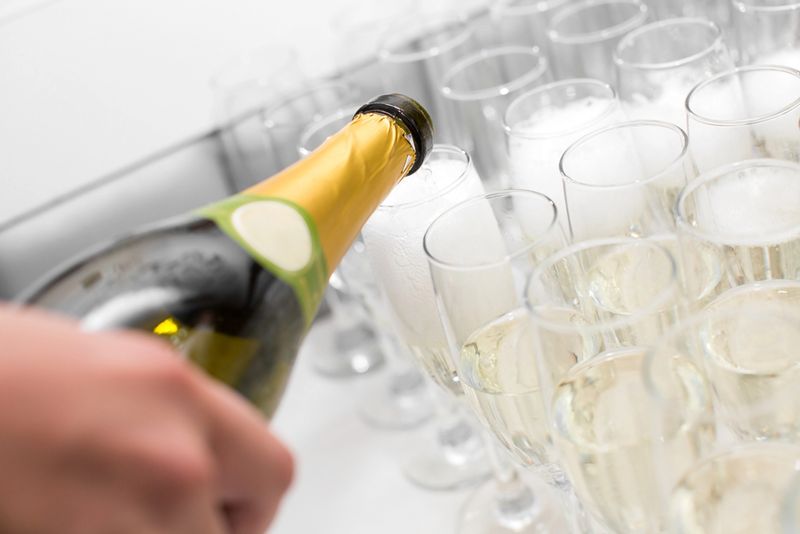
France has authorized a temporary exception to Champagne’s long-standing 13% alcohol limit after an unusually hot 2026 growing season pushed grape sugar levels so high that some bottles could reach 15%.
The change was made official in an order published on October 28 in the Journal officiel, after the Champagne industry’s governing body, the Comité Champagne, obtained a temporary waiver from the National Institute of Origin and Quality, known as INAO, in early September. The exception applies to wines bottled in 2027 that blend 2026 wines with older reserve wines.
Until now, Champagne bottles could not exceed 13% alcohol once the sparkling wine was finished. Under the new measure, certain blends will be allowed to go above that ceiling after the second fermentation in the bottle, the step that creates the bubbles. The move marks a first for the appellation, one of the most tightly regulated in the wine world.
According to Maxime Toubart, co-president of the Comité Champagne, only a limited number of growers are expected to be affected. INAO, however, has said the number is neither marginal nor excessive, suggesting the issue is significant enough to require a regulatory response.
The exception follows a year of extreme weather in Champagne. Producers in the Marne began cutting the first grape clusters on August 6, the earliest harvest ever recorded in the appellation, according to the source report. Harvesting then became widespread on August 17, roughly two weeks earlier than in 2025.
The 2026 season was marked by five heat waves, historic spring frosts and very early flowering, followed by drought. Champagne’s crop fell to about 7,000 kilograms per hectare, down from 9,900 kilograms per hectare in 2025, the report said. With fewer grapes on the vines and intense summer heat accelerating ripening, berries reached harvest with unusually high sugar concentrations.
That matters because grape sugar becomes alcohol during fermentation. Yeast consumes the sugars in grape juice and produces alcohol and carbon dioxide. In Champagne, there is also a second fermentation in the bottle, when producers add yeast and about 20 to 25 grams of sugar per liter to create the wine’s sparkle. That process typically adds about 1.2 to 1.5 degrees of alcohol, meaning a base wine that is already unusually strong can push the finished bottle above the 13% limit.
Some 2026 cuvées could therefore end up near 14.5% or 15%, according to growers cited in the French report.
The change is not only about alcohol strength. High temperatures also reduce acidity in the grapes, especially malic acid, which is a key source of freshness in Champagne. As grapes ripen in hotter conditions, sugar accumulates faster while acidity falls. Producers and wine specialists say that combination can produce wines that taste broader and less sharp, with implications for the style and aging potential that Champagne is known for.
A sommelier cited by Agence France-Presse said the 2026 wines could be “atypical,” potentially less acidic and sweeter in perception. The Comité Champagne has said it is still too early to judge the final quality of the wines.
The regulatory change highlights a broader problem facing wine producers as climate change alters grape ripening. In Champagne, where the style has long depended on moderate sugar and strong acidity, hotter summers are shifting that balance. Toubart has said such harvest conditions could become the norm within 10 to 15 years.
Producers are already discussing adaptations. According to the report, some growers are planting vines less densely and testing grape varieties that are more resistant to drought. Champagne houses are also studying night harvesting, adjusted work schedules and machinery suited to collecting whole bunches during heat waves.
For the beverage sector, the decision could become an important precedent. It shows how a protected appellation may be forced to adjust technical rules as heat drives up natural alcohol in grapes, an issue that is emerging in other wine regions as well. Even if the measure remains narrow and temporary, it signals that climate pressure is beginning to reach the regulatory frameworks that define how wines can be made and marketed.
That prospect has prompted caution inside Champagne. The president of the Independent Winegrowers of Champagne has said the waiver should remain exceptional and that the region should focus on longer-term solutions rather than rely on repeated exemptions.
The immediate problem, though, is the 2026 crop. In a normal year, producers often enrich grape juice to reach a target alcohol level, a process known as chaptalization, and reserve wines used in blends may already have been strengthened that way. When those older wines are combined with naturally rich 2026 wines, the final alcohol level can rise even further.
The result is that the alcohol limit, once a stable rule for Champagne, no longer fits every bottle produced from a year of extreme heat. France’s decision to allow an exception reflects how quickly climate conditions are changing in one of its most closely watched wine regions.