French Winemakers Embrace Forgotten and Hybrid Grapes to Combat Climate Change
Newly approved disease-resistant varieties and revived ancestral grapes reshape vineyards as growers adapt to harsher weather and stricter regulations
2026-03-13
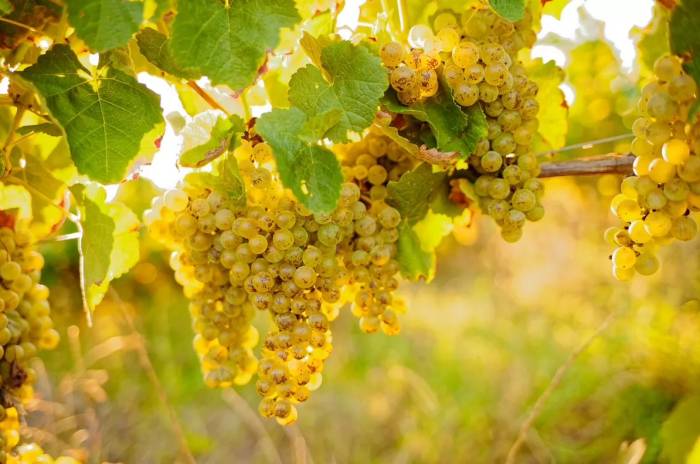
In several French wine regions, a quiet revolution is underway as winemakers turn to grape varieties that are little known or long forgotten. Names like floréal, artaban, solaris, and souvignier are appearing more often in vineyards, far from the global staples of merlot or chardonnay. This shift is driven by a mix of climate adaptation, changing consumer tastes, and the need to reduce chemical inputs and disease sensitivity.
Grape varieties are becoming a key tool for winemakers facing hotter summers, unpredictable weather, and stricter regulations on pesticides. Some regions are reviving ancient grapes that once defined their local wines. In the South-West of France, for example, Gaillac’s vineyards are highlighting grapes like loin de l’œil and prunelard. In Pacherenc-du-Vic-Bilh, arrufiac is making a comeback, while petit courbu is being revived in Jurançon. Aveyron’s winemakers are also replanting fer servadou and saint-côme.
Many of these grapes were abandoned decades ago because they were less productive or ripened inconsistently. Now, some are proving resilient in the face of climate change and align with current preferences for fresher, lighter wines. In Saint-Mont, the grape called tardif was identified in 2000 by the Plaimont cooperative’s research team. Tardif was officially recognized in 2017 and introduced into the region’s AOC rules in 2021 as an adaptation variety. By 2024, it became an approved accessory grape for local wines. Bouysselet, native to Fronton and rediscovered in 2008 at Domaine La Colombière after years of obscurity, is now seen as a potential foundation for white wines in the Fronton AOC.
In Bordeaux, there is renewed interest in ancestral grapes. At Château de Cazebonne, Jean-Baptiste Duquesne has cataloged over 50 old varieties and is gradually replanting mancin, castets, saint-macaire, and bouchalès—grapes once dismissed for their acidity but now blended into a special cuvée called Cépages d’antan. In Médoc, Richard Barraud is betting on carménère, another late-ripening historic grape. The Abel Lorton estate in Saintonge grows eight varieties across 23 micro-parcels, including five ancestral types: baroque blanc, balzac noir, counoise, chauché, and crouchen. In Champagne’s Aube region, Drappier winery has revived fromenteau—a grape common before the phylloxera crisis—in its single-variety cuvée “Trop m’en faut.”
Hybrid grape varieties are also gaining ground as winemakers seek both flavor quality and natural resistance to diseases like powdery mildew and downy mildew. These hybrids result from crossing vitis vinifera—the species behind most European wine grapes—with hardier American species. The concept dates back over a century; baco was created in 1898 and remains important for Armagnac production. In the 1970s, Montpellier researcher Alain Bouquet developed “cépages bouquet” by crossing vinifera with vitis rotundifolia.
Interest in hybrids has surged recently due to tighter restrictions on chemical treatments and more frequent extreme weather events. The ResDur grape family—developed by INRAE and IFV—carries one or more genes for disease resistance. Plantings of these grapes are increasing across Languedoc and other regions. The Foncalieu cooperative launched its NU.VO.TE cuvée made from artaban in 2019. Ateliers d’Exea in Corbières produces rosé from souvignier gris and white wine from muscaris. Newcomers Pierre & Antonin promote their “Petit Sauvage” cuvées made from souvignier gris and cabernet cortis with only three treatments per year compared to fifteen for traditional grapes.
Other pioneers include Mickael Raynal at Domaine de Revel and Roman Tournier northeast of Toulouse; both focus on so-called “piwi” grapes—a German acronym meaning fungus-resistant. In the Basque mountains, Château Couronneau has planted three hectares of these hybrids.
On February 14 this year, French authorities approved fourteen new vine varieties for cultivation nationwide—eleven of which are resistant types (six ResDur and five Bouquet). As climate pressures mount and regulations tighten further on vineyard chemicals, many winemakers see these lesser-known or hybrid grapes as essential to the future of French winegrowing.

Founded in 2007, Vinetur® is a registered trademark of VGSC S.L. with a long history in the wine industry.
VGSC, S.L. with VAT number B70255591 is a spanish company legally registered in the Commercial Register of the city of Santiago de Compostela, with registration number: Bulletin 181, Reference 356049 in Volume 13, Page 107, Section 6, Sheet 45028, Entry 2.
Email: [email protected]
Headquarters and offices located in Vilagarcia de Arousa, Spain.