Italy’s Grocery Wine Market Trades Up
Sparkling wines and higher-priced bottles helped offset falling volumes in 2025, Circana data showed.
2026-04-16
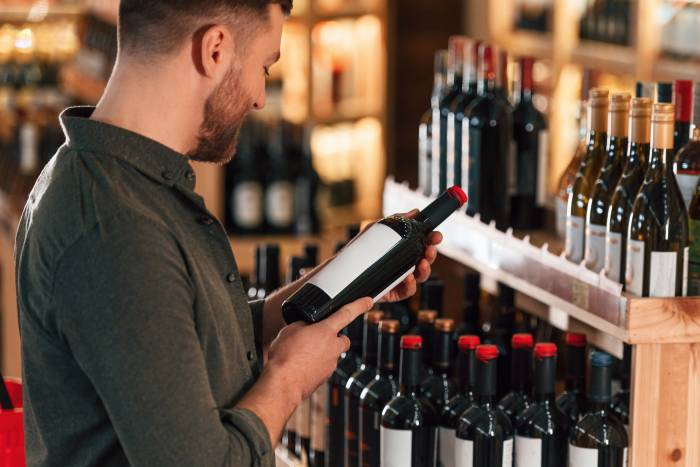
In Italy’s grocery wine market, 2025 ended with a split result: volumes fell, but value held up, helped by shoppers moving toward higher-priced bottles and sparkling wines regaining ground.
The market for wine and sparkling wine in organized retail reached 3.2 billion euros in 2025, with 737 million liters sold, according to Circana data presented at the 22nd roundtable on the wine market in Italian grocery stores, organized by Veronafiere at Vinitaly 2026 in Verona. The figures showed a slight decline in value of 0.5%, a sharper drop in volume of 2.7%, and an average price increase of 2.3%.
Virgilio Romano, insight director at Circana, said the market is being reshaped by pressure on volumes and a search for value. He said competition is likely to reward operators that are more efficient and better able to present products in a way that attracts new consumers, especially in the middle and upper-middle price ranges.
One of the clearest trends was what Circana described as a mix effect: consumers are buying more expensive wines than they did before, pushing up the average price. Bottles priced above 10 euros performed better than lower-priced segments, while wines under 5 euros, which still account for the largest share of volume, saw the steepest declines.
Among white wines, those priced above 5 euros rose 2%, with growth reaching 8.4% for bottles above 10 euros. Sparkling wines continued to recover and gain share, posting gains of 1.5% in volume and 1.2% in value. Rosé sparkling wines rose 3.8%, and white sparkling wines increased 2.2%.
Still wines posted a smaller decline, down 3.1% in volume and 0.5% in value. Red wines continued to lose ground, falling 4.2%, though they remained the largest category with a 36% market share. Frizzante wines had the weakest performance, down 5.7% in volume and 5.5% in value. Still white wines were among the few categories that contributed positively to the overall result, even though they also remained slightly negative at minus 2.1%.
The decline in volume affected all retail channels except e-commerce, which showed a more favorable trend. Sales fell both on promotion and at full price, with larger companies and private-label products feeling more pressure than smaller producers, which proved more resilient.
The market also showed growing interest in emerging denominations and local identity, as consumers balanced experimentation with a desire for familiarity and trust. A small but expanding niche has also emerged around dealcoholized wines, which generated about 3 million euros in revenue and are gradually reaching more stores.
The first weeks of 2026 have so far confirmed the late-2025 pattern: wine volumes remain under pressure, while sparkling wines continue to show stronger momentum. Analysts said a fuller picture will require data from the first four months of the year.
Alberto Arcidiacono, head of private label beverage purchasing at Crai, said consumers are becoming more selective and are willing to trade up despite inflation and lower volumes. He said grocery retailers now need to do more than protect sales; they need to capture demand for higher-value products by improving assortment, strengthening private label offerings and expanding premium lines and sparkling wine options.
Lorenzo Cafissi, beverage director at NewPrinces Group, said the close of 2025 again showed a sector under strain that has not found a clear rebound. He called for stronger strategic partnerships between industry and retail to bring wine back into mainstream attention.
Valeria Gasparre, country director for Italy at Illva Saronno and Duca di Salaparuta, speaking for Federvini, said global wine consumption reflects both structural changes tied to younger generations and possible cyclical factors. She said producers need to rethink how they communicate wine by using language that feels relevant to consumers who want brands to offer a distinct experience.
Alessandra Manzato, group category manager for grocery and beverages at Conad, said her company performed better than the market by limiting its volume decline while increasing value more strongly than average. She said the strongest pressure remains on still wine, while sparkling wine continues to be the most dynamic segment. She linked that growth partly to the rise of domestic aperitivo occasions, which are also supporting related categories such as spirits for cocktails, tonic water and ready-to-drink beverages.
Laura Mayr, general manager of Ruggeri and speaking for Unione Italiana Vini, said sales trends in grocery stores confirm a market that is largely flat overall but increasingly driven by sparkling wines, white wines and premium products. She said producers must work on both quality and quantity, including clearer price positioning and better product segmentation. She also pointed to inventory levels as a concern, saying there is now the equivalent of one-and-a-half harvests sitting in cellars.
Eleanna Pizzinelli, head of beverage at Coop Italia, said the numbers point to a mature market where contraction appears structural rather than temporary. She identified two priorities: differentiation through stronger brand content and storytelling tied to changing consumption habits, along with innovation across no-alcohol products, formats and packaging.
Marco Usai, wine specialist at Md Discount, said discount stores have become central to Italy’s wine supply chain. He said his company is focusing on wines with identity and quality at prices that remain accessible to new consumers. He added that simplifying shelf offerings rather than overwhelming shoppers has become part of its strategy.
The discussion at Vinitaly reflected a market that is no longer growing through volume alone but is instead being shaped by trading up, changing drinking habits and a stronger role for sparkling wine across Italian retail shelves.

Founded in 2007, Vinetur® is a registered trademark of VGSC S.L. with a long history in the wine industry.
VGSC, S.L. with VAT number B70255591 is a spanish company legally registered in the Commercial Register of the city of Santiago de Compostela, with registration number: Bulletin 181, Reference 356049 in Volume 13, Page 107, Section 6, Sheet 45028, Entry 2.
Email: [email protected]
Headquarters and offices located in Vilagarcia de Arousa, Spain.