Germany’s Wine Industry Courts Gen Z
Producers are turning to alcohol-free blends, cans and social media as younger Germans drink wine less often.
2026-05-05
Germany’s wine industry is trying to reach younger drinkers as consumption among that group continues to fall, with producers and trade groups increasingly tailoring products and marketing to the habits of Generation Z.
About 18% of people born between 1995 and 2005 drink wine regularly, according to Laura Ehm of the Weincampus Neustadt, citing industry data reported by the German Press Agency. Roughly 11% in that age group regularly drink sparkling wine or sekt. The figures point to a market in which wine remains present among young adults, but far less central than it was for older generations.
A separate representative survey commissioned by the German Wine Institute and conducted among 2,000 people ages 18 to 34 found that 50% see wine as a fitting drink for a date or a restaurant meal. Sixty-one percent said they drink wine when eating with a partner. The results suggest that for many younger consumers, wine is tied less to routine drinking and more to specific social occasions.
That pattern is also reflected in company research from Rotkäppchen-Mumm, which found that young consumers tend to view wine as a beverage for calm, shared or special moments rather than for everyday use. In more active or casual settings, wine plays a smaller role. Industry representatives say some younger consumers also find wine difficult to understand, which can make it less accessible than beer, cocktails or ready-to-drink products.
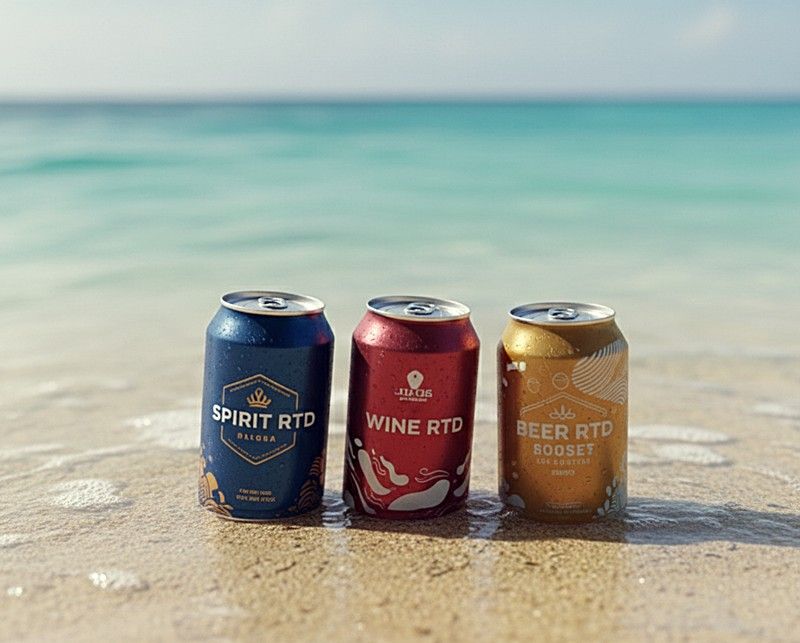
To respond, producers are expanding beyond traditional bottles and classic still wines. Alcohol-free wines, wine-based mixed drinks and alternative packaging are being used to attract younger buyers. Ernst Büscher, a spokesman for the German Wine Institute, said an aromatized sparkling wine-based drink sold in a can and consumed with a straw could appeal to younger people in a way that conventional wine does not.
Bag-in-box packaging is also gaining ground, especially for camping trips, festivals and events where glass is restricted. Michael Holzer and Ludger Reffgen, entrepreneurs from Rheinhessen, said they offer mobile bottling systems for smaller and midsize wineries so they can adapt more easily to those formats.
The industry is also leaning more heavily on social media and younger winemakers as messengers. Theresa Olkus of the Association of German Prädikat Wine Estates said the next generation of winemakers can reach new audiences through direct communication online. Julia Schittler, a winemaker from Rheinhessen, uses Instagram to show her work in the vineyard, cellar and daily operations. “People want to be brought along,” she said.
New media formats are part of the effort as well. At the end of April, Anna Zenz, the current German Wine Queen, answered questions from viewers in an ARD Twitch program called “Work hard – play hard.” The live chat covered wine knowledge, the winemaker profession and her role as Wine Queen. The broadcaster said 54% of people in Germany use computer or video games at least occasionally, equal to 37.5 million people, which helps explain why wine marketers are testing platforms more closely associated with gaming culture.
The streams remain available as video on demand for 60 days after broadcast.

Founded in 2007, Vinetur® is a registered trademark of VGSC S.L. with a long history in the wine industry.
VGSC, S.L. with VAT number B70255591 is a spanish company legally registered in the Commercial Register of the city of Santiago de Compostela, with registration number: Bulletin 181, Reference 356049 in Volume 13, Page 107, Section 6, Sheet 45028, Entry 2.
Email: [email protected]
Headquarters and offices located in Vilagarcia de Arousa, Spain.