


Singapore’s alcohol market grows on premium bottles
High taxes and tourism are pushing consumers toward pricier wine, spirits and bar sales even as volume rises only slightly
2026-05-04
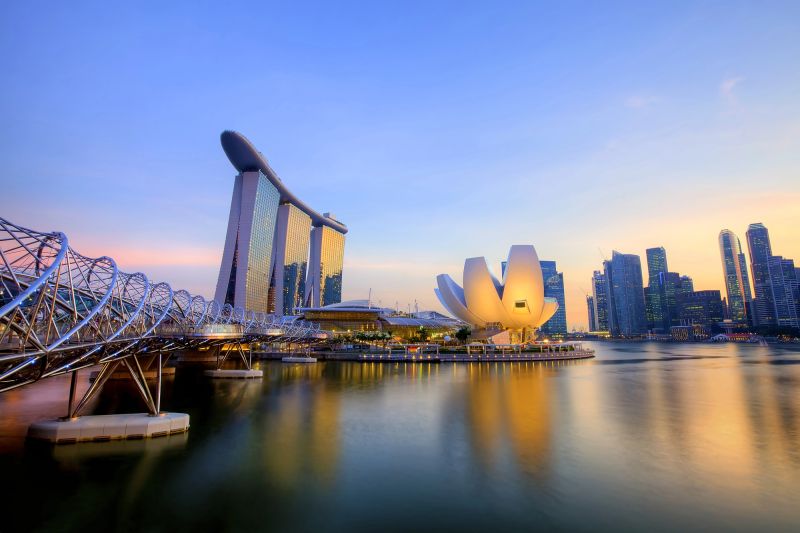
Singapore’s alcohol market is growing in value even as volume rises only modestly, a sign that the city-state’s high taxes, tourism demand and premium buying habits are pushing consumers toward more expensive bottles and drinks served in bars and restaurants.
By 2025, the market is projected to reach about US$5.234 billion and 169.5 million liters, according to industry estimates based on Euromonitor data. That would follow a year in which the market had already reached US$4.9377 billion and 167.8 million liters in 2024. The broader pattern is clear: total volume is expected to rise just 1% in 2025, while total value climbs 6%, reflecting a shift toward higher-priced products rather than simple growth in consumption.
The structure of Singapore’s tax system helps explain that trend. Alcohol duties are based on alcohol content, not just the shelf price of the product. For beer, customs duty is S$16 per liter of alcohol and excise duty is S$60 per liter of alcohol. For wine and most spirits, excise duty is S$88 per liter of alcohol, with no customs duty on those categories. A 9% goods and services tax is then applied on top of the taxable value and duties. In practical terms, that means a standard bottle of wine or spirits carries a heavy tax burden before it reaches the consumer.
That fiscal setup makes low-cost alcohol hard to sell profitably in Singapore. A 750-milliliter bottle of wine at 13% alcohol by volume faces about S$8.58 in excise duty alone before GST. A 700-milliliter bottle of spirits at 40% alcohol by volume faces about S$24.64 in excise duty before GST. The result is a market where cheap products have little room to compete on price, while premium labels can absorb the tax structure more easily and still preserve margins.
Singapore also plays a role far beyond its domestic market. It is both a consumer market and a regional trading hub, with imports often moving through free trade zones and licensed warehouses before being sold locally or re-exported across Southeast Asia. In 2023, Singapore imported US$980 million worth of wine and exported US$609 million; it imported US$2.118 billion in spirits and exported US$2.546 billion; and it imported US$101.9 million in beer and exported US$83.8 million. Those figures show how closely local consumption and regional redistribution are linked.
The on-trade remains the main engine of consumption. Bars, hotels and restaurants are expected to account for about 57.5% of total alcohol volume in 2025, up from roughly 57% in 2023, as tourism continues to support spending on cocktails, premium beer and wine by the glass. Singapore recorded 16.9 million international arrivals in 2025, adding to demand in nightlife districts, hotel lounges and fine-dining venues.
Wine stands out as the category most tied to retail channels. In 2023, about 77.8% of wine volume was sold through off-trade outlets such as supermarkets, hypermarkets and specialist retailers. Beer and spirits remain more dependent on bars and restaurants, where consumers are less price-sensitive and more willing to pay for brand names, service and setting.
The market’s value growth has also been driven by premiumization across categories. Beer still dominates by volume, but spirits generate the largest share of value per liter, followed by wine. Ready-to-drink beverages are gaining some traction among younger consumers, though they remain small compared with beer, wine and spirits. E-commerce has also grown as a sales channel, but it still represents a limited share of off-trade value.
For foreign producers, Singapore offers opportunity but little room for generic positioning. The strongest openings are in premium or premium-accessible wines, sparkling wines, fortified wines, signature aperitifs and selected spirits with strong brand identity or culinary appeal. Competing on price alone is unlikely to work in a market where taxes compress the gap between low-end and high-end products.
The regulatory framework reinforces that logic. Importers need customs permits for dutiable goods, while alcohol can be stored under suspension in free trade zones or licensed warehouses until it is released for local sale or re-exported. Wholesale distribution requires a Class 4 liquor license from the Singapore Police Force, while retail sales to consumers fall under other license classes depending on whether the product is sold for off-site consumption or served on premises.
Singapore Customs collected S$742.1 million in liquor duties in 2025, down from S$775.9 million in 2024, even as enforcement cases rose to 4,266. That combination suggests a market that is becoming more complex rather than simply larger: more premium products, more transshipment activity and more reliance on tax-suspended storage as companies manage cash flow in a high-duty environment.
For now, Singapore remains one of Asia’s most distinctive alcohol markets: small in liters, large in value and shaped as much by fiscal policy and logistics as by drinking habits themselves.

Founded in 2007, Vinetur® is a registered trademark of VGSC S.L. with a long history in the wine industry.
VGSC, S.L. with VAT number B70255591 is a spanish company legally registered in the Commercial Register of the city of Santiago de Compostela, with registration number: Bulletin 181, Reference 356049 in Volume 13, Page 107, Section 6, Sheet 45028, Entry 2.
Email: [email protected]
Headquarters and offices located in Vilagarcia de Arousa, Spain.