TUTTOFOOD 2026 Draws 123,000 Visitors in Milan
The food fair reported a 30% rise in attendance, underscoring its growing role as a global trade hub.
2026-05-18
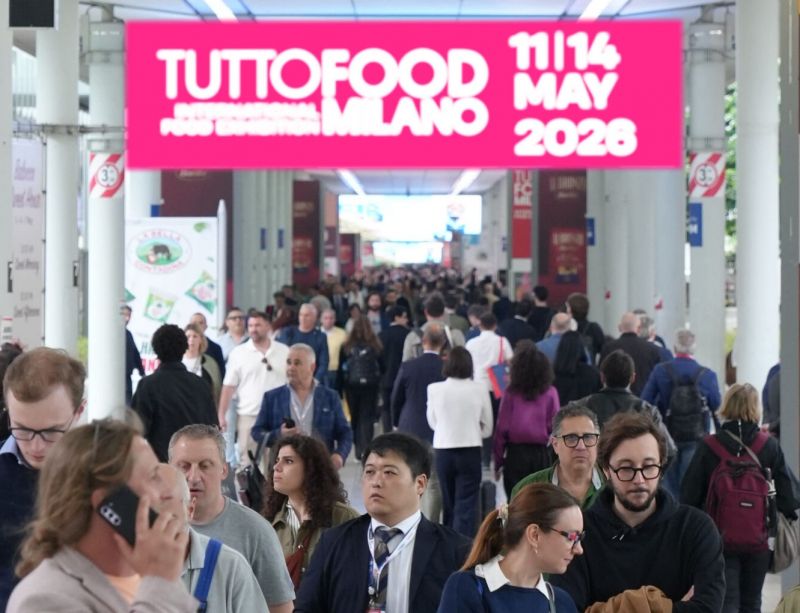
TUTTOFOOD 2026 closed in Milan with 123,000 attendees over four days, including 27,000 international visitors, a 30% increase from the 2025 edition, according to figures released Monday by the organizers. The fair, held for the second year under Fiere di Parma’s management, also drew 4,000 top international buyers and filled 10 halls with 82,000 square meters of exhibition space, all of it booked, up 15% from last year.
The event’s scale reflected continued demand from food industry professionals across manufacturing, distribution, foodservice, importing and purchasing. Organizers said the show has become a key business platform for the food and beverage sector, linking producers with buyers from Europe, the Americas, Asia and the Gulf at a time when companies are dealing with geopolitical tensions, tariffs, higher energy costs, volatile raw materials and shifting supply chains.
Fiere di Parma said the fair hosted 5,000 brands, up 20%, and that about 30% of them came from outside Italy. Spain posted a record 182 exhibiting companies, underscoring what organizers described as growing Spanish interest in the Milan event.
Antonio Cellie, chief executive of Fiere di Parma, said the results showed that the fair had filled a gap in the international trade calendar. He said exhibitors and buyers had responded positively to an event that he described as a new global meeting point for the agri-food business. Cellie added that trade fairs are no longer just product showcases but places where companies assess demand, build relationships and turn opportunities into sales.
Buyers attending TUTTOFOOD pointed to Italy’s strong position in categories such as olive oil, balsamic vinegar, flour, pasta, cookies and chocolate. They also said Italian products remain central to foodservice menus and retail assortments in several markets. One European buyer said about 70% of his restaurant business depends on Italian products. For operators such as Sysco in the United States and Cencosud in Latin America, Italy remains a major sourcing market.
Sysco, the largest U.S. foodservice distributor, said demand for quality products remained strong despite higher prices in the United States. The company said supply security now matters more than tariffs for many buyers and that sustainability and traceability are becoming more important in purchasing decisions. Sysco also said Italian food has moved beyond niche ethnic channels and is now part of mainstream American demand.
Cencosud said it came to Milan to build international assortments for South American stores and to identify new products first shown in the fair’s innovation areas. The Chile-based retailer said consumers in Latin America are increasingly open to experimentation and to recipes that combine ingredients from different countries. It also said Peru is its most dynamic market in the region and that Argentina has seen a sharp rise in imports of European products over the past year.
Promocash, the Carrefour cash-and-carry unit focused on foodservice customers, said roughly 95% of its business is tied to restaurants and about 70% of that is Italian products. The company said it uses TUTTOFOOD to strengthen ties with suppliers and find new items for French restaurateurs. It described the fair as useful because it allows buyers to compare many producers in one place and evaluate quality and assortment more efficiently than at some other international shows.
Innovation was another theme at the fair. Ben Costantini of the French company Sesamers said TUTTOFOOD was not only a place to sell current products but also where new food innovators find their market. Sesamers brought startups from seven countries working on software platforms, functional drinks, artisanal sauces and processing machinery.
After the fair closed, Banco Alimentare Lombardia collected about 25 tons of food donated by more than 600 companies with surplus stock. The food was distributed through more than 1,000 local partner organizations serving soup kitchens, shelters and family homes, reaching more than 200,000 people in need.

Founded in 2007, Vinetur® is a registered trademark of VGSC S.L. with a long history in the wine industry.
VGSC, S.L. with VAT number B70255591 is a spanish company legally registered in the Commercial Register of the city of Santiago de Compostela, with registration number: Bulletin 181, Reference 356049 in Volume 13, Page 107, Section 6, Sheet 45028, Entry 2.
Email: [email protected]
Headquarters and offices located in Vilagarcia de Arousa, Spain.