


Trump’s Tariff Pressure Puts Italian Exports on Edge
Negotiators return to talks as Rome’s exporters brace for higher duties on wine, food, machinery and other goods.
2026-05-19
The future of Italian exports to the United States is set to come into sharper focus on Tuesday, May 19, as European and American negotiators return to the table amid pressure from President Donald Trump for a faster deal and warnings of higher tariffs if Brussels does not move quickly enough. For Italian companies that sell wine, food, machinery, furniture and other goods across the Atlantic, the talks are not a routine diplomatic step. They could affect prices, margins, contracts and investment plans in one of Italy’s most important foreign markets.
The negotiations build on the political understanding reached on July 27, 2025, in Turnberry, Scotland, where European Commission President Ursula von der Leyen and Trump agreed on a nonbinding framework that set a 15% tariff ceiling on most European goods entering the United States. The deal was meant to prevent a much harsher trade clash. Without it, U.S. tariffs were scheduled to rise to 30% on Aug. 1, 2025, while the European Union had prepared retaliatory duties on American products worth more than 21 billion euros in an initial package and another 72 billion euros in a second round aimed at technology and autos.
The Turnberry framework also included commitments by the European Union to remove tariffs on major American industrial goods, improve access for some U.S. agricultural products and support large-scale economic pledges tied to energy purchases, semiconductor investment and broader corporate investment flows. But the agreement left key details unresolved, including how and when it would be ratified by the 27 member states and which sectors would receive exemptions.
That uncertainty has become more urgent in recent weeks. Trump has publicly pressed the European Union to implement the agreement by July 4, 2026, and has threatened new tariff increases if he believes Brussels is moving too slowly. Andrew Puzder, the U.S. ambassador to the European Union, has also warned that Europe should expect higher duties on cars and trucks relatively soon. The automotive sector remains one of the most exposed areas in the talks.
For Italy, the stakes are high because the United States is one of its largest export markets. In 2025, Italian sales to the U.S. rose 7.2%, but that increase was driven largely by pharmaceuticals, which jumped 54% to 15.7 billion euros and became Italy’s top export sector to the American market with a 22.7% share of total shipments there. Excluding pharmaceuticals, exports to the United States fell 1.7%. Traditional sectors weakened across the board: food exports declined 4.5%, furniture fell 8.2%, metal products dropped 7.9% and machinery slipped 3.4%. Auto exports were also under pressure, with passenger vehicles down 18.5%.
Confindustria has estimated that tariffs at 15% could cost Italy about 23 billion euros in potential losses overall. A weaker dollar adds another layer of strain by reducing euro-denominated revenue for exporters even when volumes hold up.
Small businesses are especially vulnerable. They account for about 14% of Italy’s exports to the United States overall, but their share is much higher in several sectors: 38% in wood products, 30% in textiles, 25% in furniture and components and 20% in food products. Those firms often have less room to absorb sudden tariff shocks or currency swings.
The Turnberry deal covers most industrial goods from Europe, including cars and auto parts that had faced tariffs as high as 27.5%, along with semiconductors, lumber and many pharmaceuticals. It also includes provisions on supply-chain resilience and investment cooperation. Some sectors are exempt from additional duties, including aircraft and aircraft parts, energy products and certain chemicals.
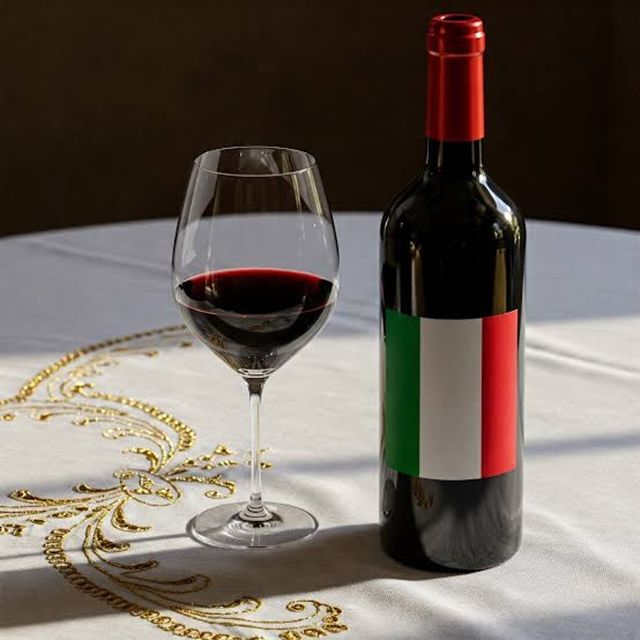
But some of Italy’s most sensitive exports remain outside the agreement. Wine, beer and spirits were not included in the tariff relief package, a gap acknowledged by Maros Sefcovic, the European commissioner for trade. That omission matters for Italy’s agro-food industry, where producers have warned of losses that could exceed 1 billion euros across food-related supply chains if duties remain in place or rise further.
The rules affecting steel, aluminum and copper have also changed in ways that could hit many small and mid-sized exporters indirectly. Under the new approach, tariffs are no longer applied only to the value of the metal content in a product but can be calculated on the full value of the exported good. For manufacturers of machinery or components with significant metal content, that can sharply raise customs costs and make it harder to stay competitive without cutting margins.
There was one sign of relief earlier this month when the U.S. Court of International Trade struck down additional tariffs imposed under Section 122 of the Trade Act of 1974 at a rate of 10%. That ruling eased some pressure on the broader system but did not remove the underlying uncertainty facing exporters as negotiations continue.
Italian companies are already adjusting their strategies. Trade specialists say firms need constant monitoring of tariff changes because rules can shift within weeks or even days. Many exporters are also looking beyond the United States to reduce dependence on a single market. In 2025, growth in Italian exports came partly from other destinations outside Europe, including India, OPEC countries and Britain.
Higher-end products tend to hold up better under tariff pressure because buyers are less sensitive to price changes when quality and brand matter more than cost alone. That gives some Italian producers an advantage, but it does not eliminate exposure for companies selling into mid-market segments where price competition is tighter.
Public support tools are available through Sace, Ice and Simest for companies seeking export credit protection, market diversification or guarantees for international operations. For many firms now waiting on Tuesday’s talks in Washington and Brussels, those instruments may become more important if trade tensions deepen again rather than ease.
