Kentucky Bourbon Makers Cut Production as Demand Slows
Warehouses are filling with unsold whiskey, forcing distillers and suppliers to trim staff and rethink expansion plans
Monday, May 18, 2026
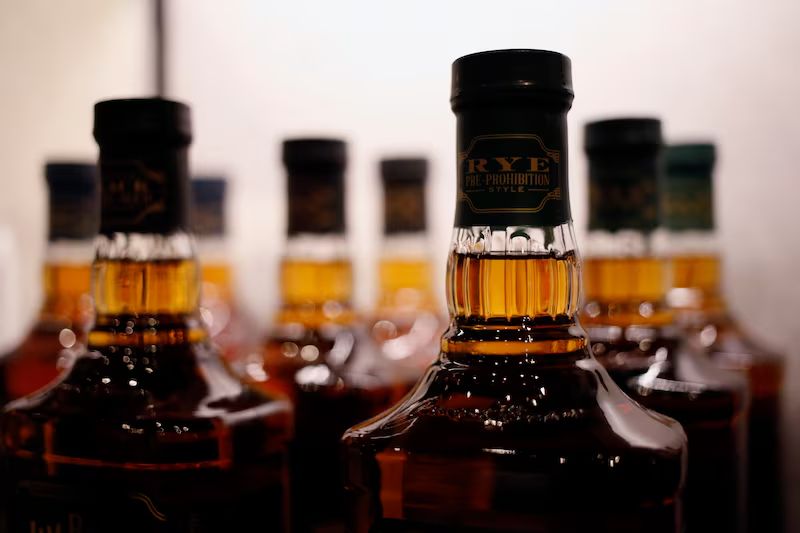
Kentucky’s bourbon industry is confronting a sharp reversal after years of expansion, with distillers, barrel makers and related businesses cutting production and trimming staff as demand cools and warehouses fill with unsold whiskey.
At Jim Beam’s sprawling campus south of Louisville, the company has paused output at its 65-foot still since January and does not expect it to restart until at least 2027. The still, which can produce a barrel of bourbon about every 93 seconds, sits at the center of a property where storage buildings are packed with aging barrels that may sit longer than planned before finding buyers.
The slowdown reflects a broader shift in the U.S. spirits market. During the pandemic, Americans stocked home bars and boosted sales of bourbon and other liquors. Distillers expanded capacity to meet what they expected would be lasting demand. Instead, consumption has softened as more drinkers cut back because of inflation, health concerns and changing habits. Some consumers have joined the sober-curious movement. Others are turning to cannabis and THC beverages. Weight-loss drugs have also affected drinking patterns.
American whiskey sales peaked in 2022 at 31.2 million nine-liter cases, according to industry data cited by the Distilled Spirits Council. That figure fell to about 30 million cases in 2025. In Kentucky, which produces about 95% of the world’s bourbon, inventories have climbed to roughly 16.1 million barrels, or about 300 million cases, according to the Kentucky Distillers’ Association. Industry estimates suggest that stockpile could last as long as 10 years.
The pressure is being felt across the state’s bourbon corridor, from Louisville to Bardstown and beyond. Kentucky now has 125 licensed distilleries, more than at any point since Prohibition ended in 1933. But some of those distilleries have laid off workers or shut down entirely. Barrel suppliers are also seeing weaker orders and lower prices.
At the peak of the recent boom in 2023 and 2024, distillers were paying more than $285 for a barrel. Those prices have since fallen sharply. Used barrels that once sold for more than $200 at the end of 2024 are now fetching around $50 on the resale market, according to industry players. Some distillers have even begun selling barrels as garden planters to clear inventory.
The downturn has forced companies to rethink their plans. Brown-Forman, the Louisville-based maker of Woodford Reserve and Old Forester, said last year that it would lay off 12% of its workforce, or about 650 employees, in response to weakening sales. The company also closed its cooperage in Louisville and said it expected more than $30 million from selling the facility. Brown-Forman had been in merger talks with Pernod Ricard earlier this year, but both companies said in late April that discussions had ended without an agreement.
Jim Beam’s parent company, Suntory Holdings of Japan, is also adjusting. Workers at the Clermont campus have been reassigned to bottling and other tasks while the company looks for ways to move more product, including flavored bourbon varieties and a zero-alcohol citrus drink called Citrus Sin. The brand has also promoted bourbon-and-lemonade cocktails and pineapple-infused bourbon in an effort to reach younger drinkers.
The strain extends beyond large producers. Craft distillers that benefited from pandemic-era demand are now scaling back production and staff. Michael Myers, who founded Distillery 291 in Colorado Springs after leaving New York following the Sept. 11 attacks, said his company cut its workforce to 12 from 30 after sales weakened and inflation made premium spirits harder to sell.
The problems are not limited to domestic demand. Trade tensions have added another layer of uncertainty for exporters as tariffs threaten alcohol shipments abroad. That has complicated efforts by American distillers to rely on foreign markets just as U.S. consumption slows.
For some companies, tourism remains one of the few bright spots. Jim Beam continues to welcome visitors to its Clermont campus, which drew about 150,000 people last year. The site includes exhibits tied to bourbon history and remains an important stop on Kentucky’s Bourbon Trail, where tourism has helped support local restaurants, hotels and related businesses.
Still, the industry’s current challenge is clear: too much bourbon is aging in too many warehouses at a time when fewer people are buying it. For distillers that spent heavily during the boom years, the hangover is now showing up in production cuts, lower barrel prices and a search for new ways to keep one of America’s signature spirits moving through the market.