U.S. beer sales volumes fell 5.3% before the summer season
Bernstein said the downturn remained broad across major brewers, with only a few brands showing resilience in a shrinking market.
2026-06-09
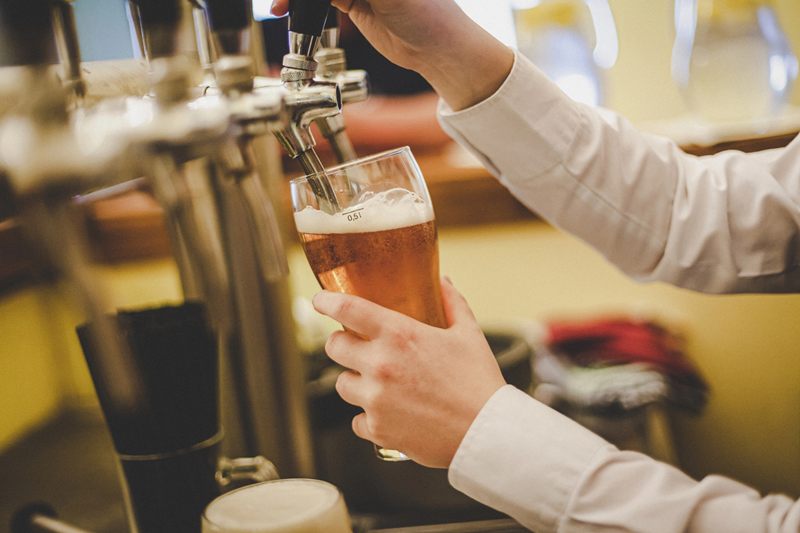
U.S. beer sales volumes fell 5.3% over the past 12 weeks, according to a new note from Bernstein, adding to signs that demand remains weak across much of the industry as brewers head into the key summer selling season.
The research firm said the slowdown has held steady in the most recent readings rather than easing. On a two-week trailing basis, beer market volumes were down 6.9%, while the four-week trailing measure showed a 7.2% decline. Bernstein said the weakness began after a rise in gasoline prices and has since remained broad across major brewers.
The report matters for beer makers, distributors and retailers because volume trends shape production plans, shelf space decisions, promotions and purchases of inputs such as malt and hops. A sustained drop in shipments can also pressure margins if companies respond with heavier discounting to protect market share.
Among the largest suppliers, Constellation Brands continued to outperform the broader market, even as its own volumes declined. Bernstein said Constellation’s volumes fell 2.3% on a 12-week trailing basis, a smaller drop than the overall market, allowing the company to gain 50 basis points of share from a year earlier. Its market share reached 17.8%.
Within Constellation’s portfolio, recent brand performance was mixed over the latest four weeks. Modelo Especial fell 6.5% from a year earlier, Corona Extra declined 8.2%, while Pacifico rose 10.4%. The figures suggest that even one of the strongest players in U.S. beer is not fully insulated from softer consumer demand, though it is still holding up better than rivals.
Anheuser-Busch InBev posted a 4.2% volume decline on a 12-week trailing basis, according to Bernstein. Over the latest four weeks, Michelob Ultra grew 0.9% and Busch Light slipped 0.9%. Other core brands showed steeper declines: Bud Light fell 12.5%, Budweiser dropped 9.5%, Busch declined 12.8% and Natural Light was down 8.6%.
Molson Coors recorded a 7.5% decline in volumes on a 12-week trailing basis. In the latest four-week period, Coors Light fell 8.5%, Miller Lite dropped 9.5%, Keystone Light declined 2.7% and Blue Moon was down 11.9%. Coors Banquet was one of the few bright spots in that group, posting growth of 1.4%.
Boston Beer Company showed some of the sharpest declines in the report. Its volumes fell 13.7% on a 12-week trailing basis and dropped 16.8% over the latest four weeks compared with the same periods a year earlier.
Heineken’s U.S. business also remained under pressure. Bernstein said its volumes declined 11.1% on a 12-week trailing basis and were down 12.5% over four weeks.
Diageo performed somewhat better than the market average, though it still posted lower volumes. Bernstein said Diageo’s beer volumes fell 1.7% on a 12-week trailing basis, or 360 basis points better than the broader market.
The report points to an industry facing weak demand across price tiers and brand portfolios at a time when brewers would normally look for warmer weather and seasonal gatherings to support sales. Analysts did not describe the weakness as limited to one company or one segment, but rather as a broad pullback affecting imported beers, domestic light lagers and craft labels alike.
That broad pattern is likely to keep investors focused on whether companies can defend profitability through pricing and mix even as unit sales fall. It also raises questions for wholesalers and retailers about inventory levels during summer months, when beer typically captures more outdoor and event-driven consumption.
Bernstein’s data suggest that relative winners are still emerging inside a shrinking market. Constellation has continued to take share despite lower volumes, while select brands such as Pacifico, Michelob Ultra and Coors Banquet have shown resilience. But those gains have not been enough to offset wider declines across many of the country’s biggest labels.
For grain suppliers, packaging companies and other parts of the beer supply chain, the numbers are another sign that weaker consumer purchasing is moving beyond isolated brands and becoming an industry-wide issue. If that trend continues through coming retail scans, brewers may face tougher choices on promotions, production schedules and spending for the rest of the year.
